
A front door for a house that makes sparkling wine
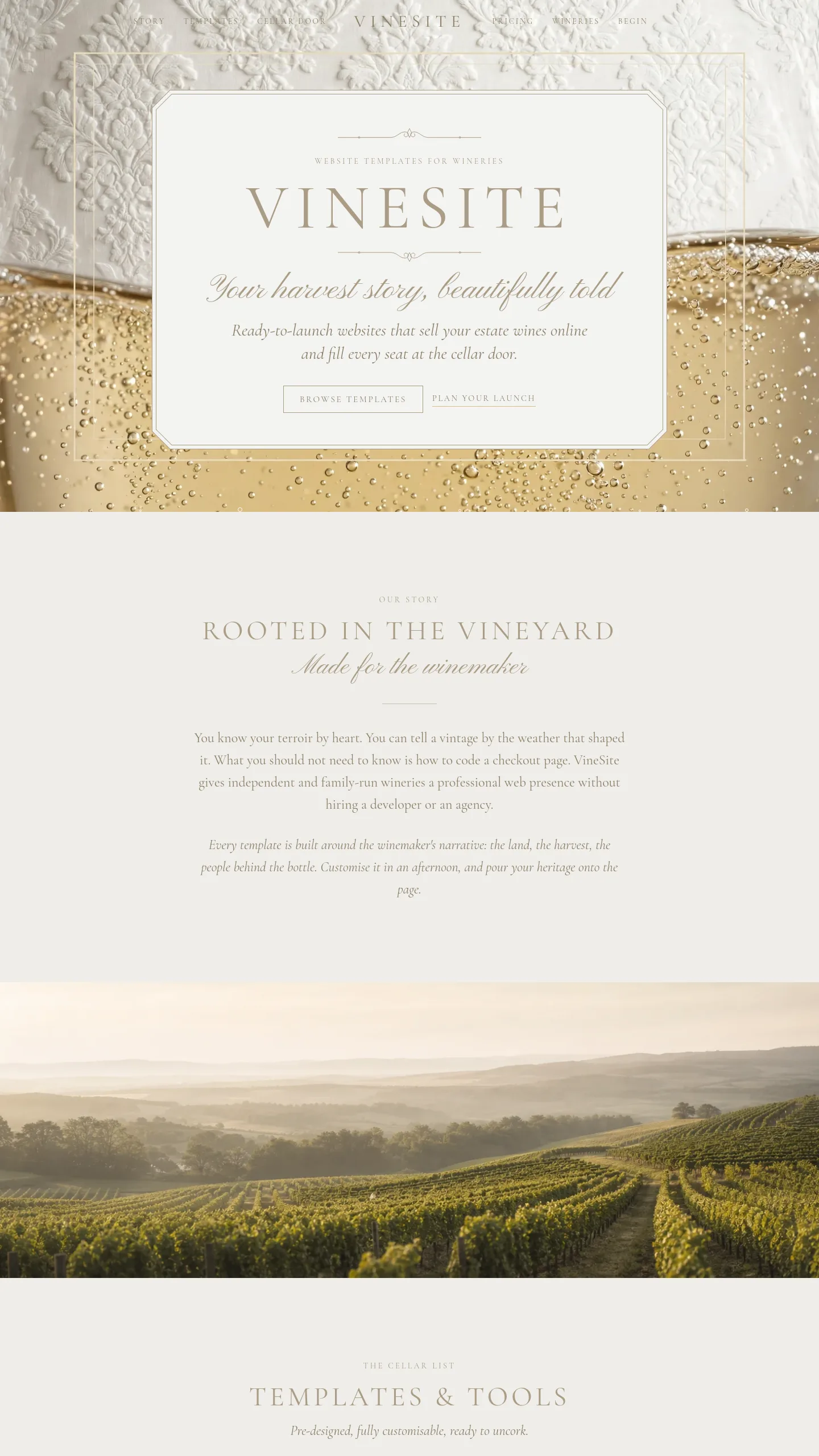
Champagne Luxe is built around one idea: the wine you sell has bubbles in it. The background is a glass of sparkling wine filling the lower half of the screen, so visitors know what kind of producer you are before they read a word. That makes it a natural fit for a champagne house, a crémant or traditional-method producer (the method where the second fermentation happens in the bottle), or an English sparkling estate that wants to sit alongside the French names. It suits the premium end of the market. The whole page reads like a wine label, with a framed plaque and gold lettering, which works for a business selling celebration bottles, wedding orders and corporate gifts at a price that has to feel earned.
What is already in place
The template gives you a single opening screen, and it is deliberately spare. One framed card holds five things: your house name in spaced capitals, a short handwritten-style line beneath it, a two-line subtitle, and a pair of ornamental flourishes either side of the name. The sample wording reads "Champagne", "The Art of Bubbles" and a line about terroir, tradition and French savoir-faire. That shows the kind of wording it expects: a name, a promise and one sentence of heritage.
Nothing else is on the screen. There are no buttons, no menu and no contact details. That is what keeps it feeling like a label rather than a shop window, and it is also the main thing you will build on.
The work between choosing it and launching
Swapping the copy is quick because there are only three lines of it. The harder part is choosing the words: with so little space, your name and one sentence have to carry the whole brand.
You would add a way forward from the opening screen, such as a "Shop the cuvées" or "Book a cellar visit" button, plus a menu or contact line if visitors arrive ready to order. The template supplies the opening screen only, so the pages behind it are yours to build: your range, the cellar story, tastings, stockists.
The lettering is a soft gold on a pale background. That is part of its appeal, but it also means it reads best in short phrases, so keep longer text for the pages behind it. If you have your own photograph of your wine in the glass, swapping it in makes the page unmistakably yours. The current one works as a stand-in until then.
Why pick it over the other winery templates
Sage Harvest sells the vineyard and Burgundy Elegance sells the tasting. Champagne Luxe sells the occasion: the toast, the gift, the bottle opened for a reason. It fits best when customers buy from you to mark something, and when sparkling wine is your main product rather than one line on a longer list.